01
Walk the White Dune
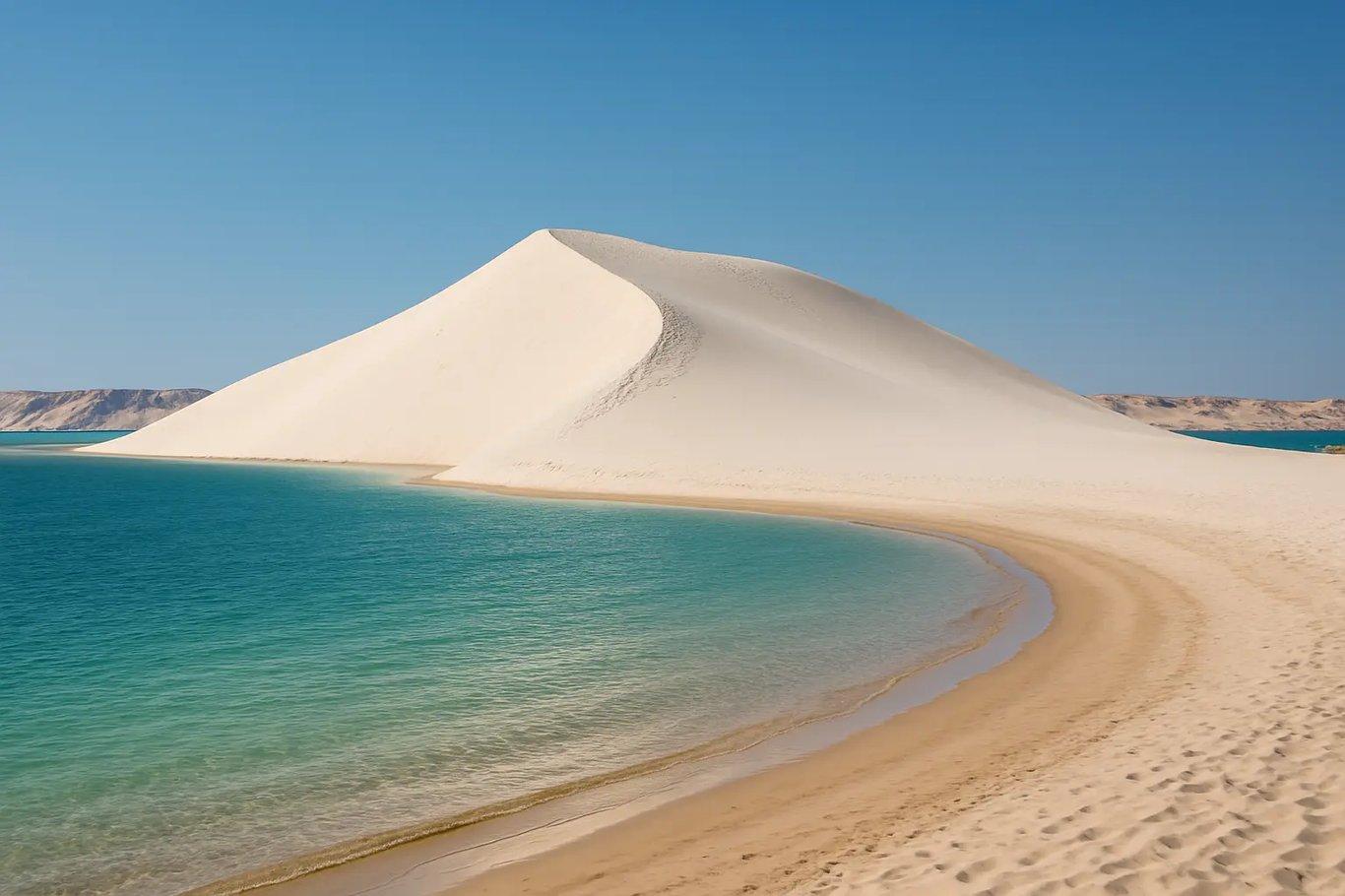
A 30-metre snow-white sand dune drops into the lagoon at the peninsula's neck. Walk it at sunrise before the wind wakes; the silence is total.
The Destination · Dakhla, Morocco
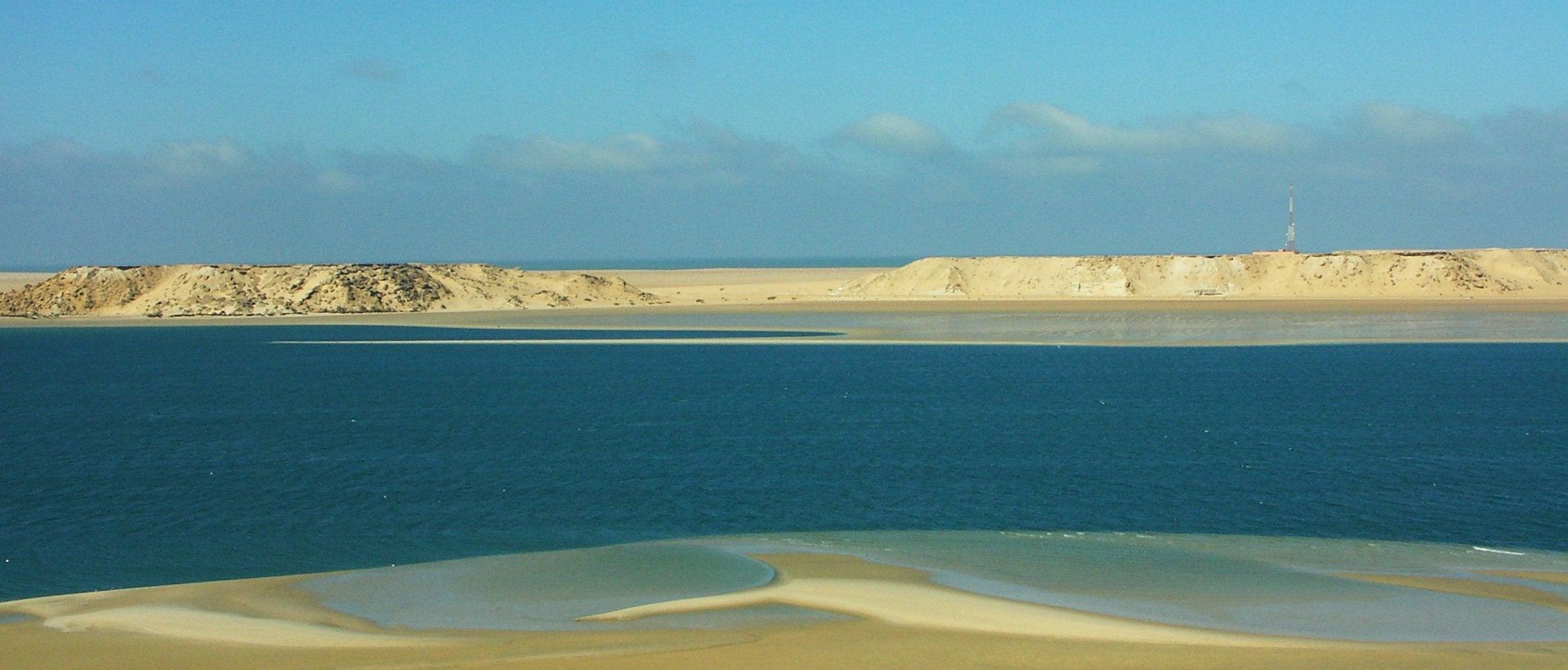
A peninsula the Sahara pushed into the Atlantic. Forty-five kilometres of flat lagoon water. A trade wind that has not missed a day since before maps. This is Dakhla.
The Geography
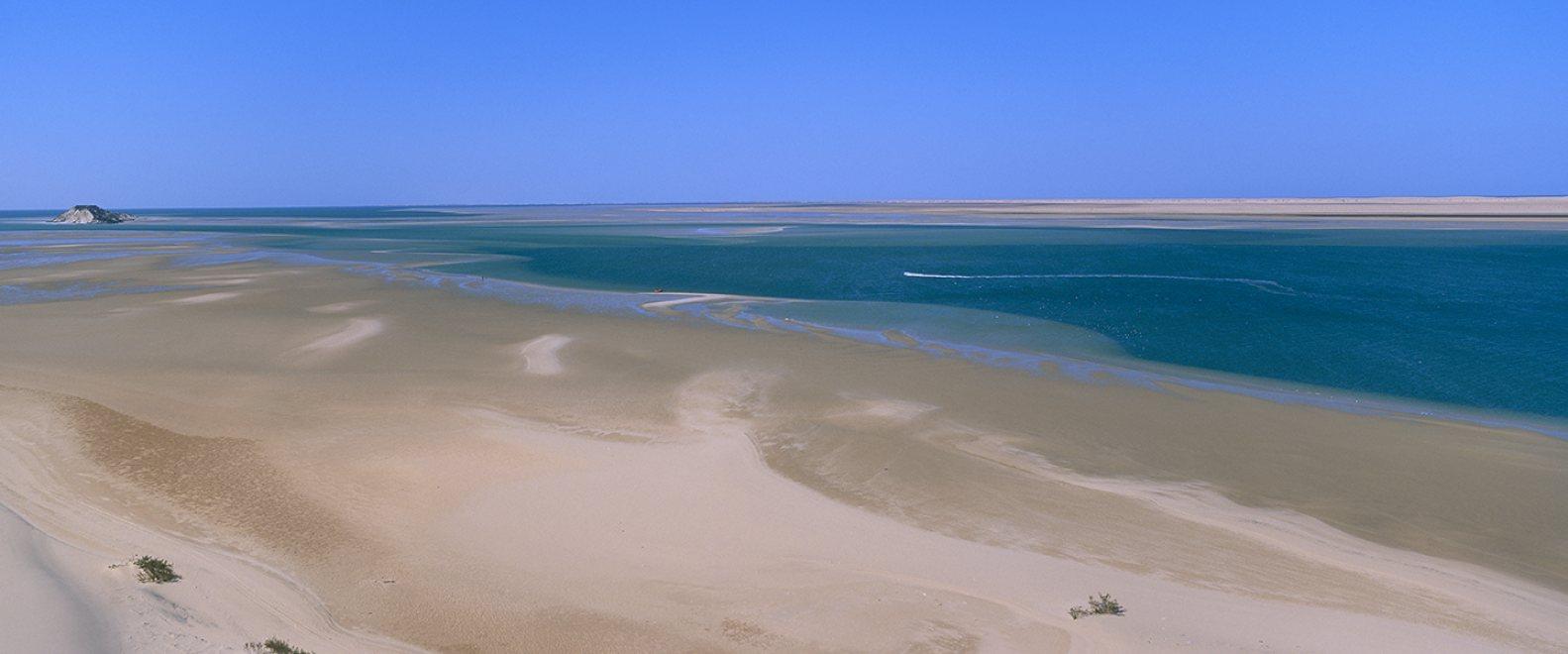
Dakhla sits at the southern edge of Morocco, where the Sahara reaches the Atlantic in a long sandy peninsula. The city of about 100,000 looks west over the open ocean; east, a 45-kilometre lagoon of warm, shallow, mineral-rich water separates the peninsula from the mainland desert.
The meeting of heated Sahara air and cold Atlantic current creates a thermal engine: every day, mid-morning, the wind arrives. It does not negotiate. Locals read it in surfaces — glossy at dawn, rippled by ten, standing straight by noon. The same turn, every day, all year.
The Wind
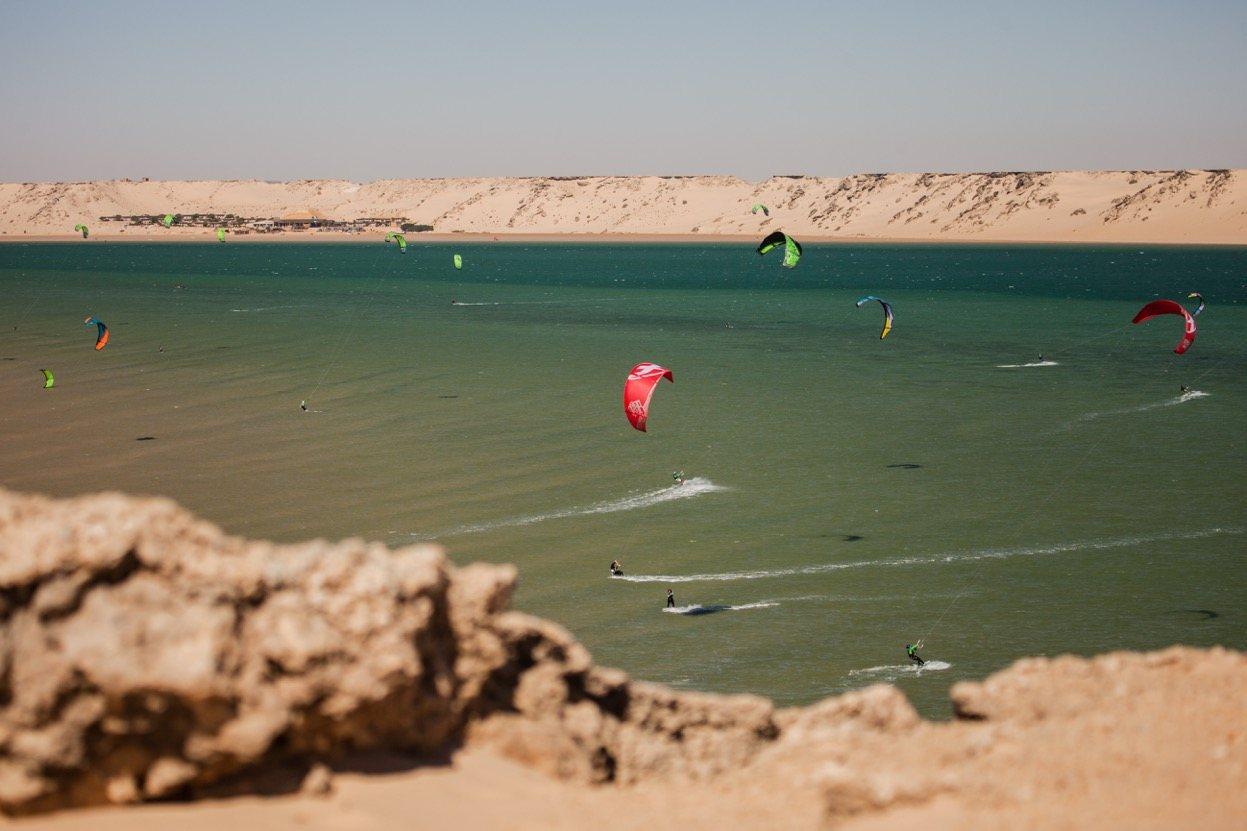
Dakhla's wind is not a season — it is a calendar. From April to October it blows 18 to 30 knots, almost every day, from the same north-northeast quarter. In winter it softens to 12 to 18, still rideable, still daily. There is no other spot on earth where a kitesurfer can plan a session three months ahead and trust the forecast.
The GKA Kite-Surf World Cup has made Dakhla a regular stop (the 2025 edition ran 8 to 12 October) for one reason: the conditions do not fail. Riders do not chase wind here. They wait for the tide.
The Lagoon
The lagoon is the gift. Knee-deep for hundreds of metres, warm enough to ride in a shorty year-round, flat as a mirror on the inside, choppy and rampy further out. It is one of the few places on earth where a beginner can stand up in waist-deep water for an entire lesson, and an advanced rider can ride 40 kilometres downwind without a single tack.
The same lagoon grows oysters — farmed on stakes for decades, lifted at dawn, on the table by noon. Flamingos wade the shallows at golden hour. Fish farms raise sea bass in the deeper channels. The lagoon is not scenery; it is an economy and an ecosystem.
Beyond the Kite
01
A 30-metre snow-white sand dune drops into the lagoon at the peninsula's neck. Walk it at sunrise before the wind wakes; the silence is total.
02
Dakhla oysters — cucumber, melon, a clean salt finish — are lifted from the nearest beds at dawn. The catch of the day comes off the Atlantic side. The bay writes the menu.
03
Pink flocks cross the golden lagoon at dusk — a photographer's dream and a child's first wildlife lesson. They feed in the shallows, undisturbed by the wind.
04
Light pollution is zero. The Milky Way casts a shadow on a moonless night. Bring a blanket, a telescope if you have one, and the patience of a sailor.
05
Stakes stretch in long rows across the lagoon — a working aquaculture that predates the hotels. Arrange a visit at low tide; the farmers explain the cycle.
06
The single road that ribbons along the lagoon is itself the experience — oyster stakes, camel herds, one long ribbon of water. Drive it slowly, at golden hour.
When to Come
The steadiest air, warm water, long golden sessions. The connoisseur's season — premium conditions, fewer crowds.
Strong thermal months — 25 to 30 knots common. Riders' arithmetic. Early sessions, long lunches, siestas with a reason.
Warm water, softening wind, the GKA World Cup in October. The second peak season — best balance of conditions and calm.
Softer wind (12 to 18 knots), colder light, the sky at its most ancient. Belongs to walkers, readers, star-gazers and long-stayers.
Getting There
Daily national flights link Casablanca to Dakhla in about two hours, with same-day connections from Europe's morning departures. The window seat on the left: the Atlas, then the desert, then the lagoon. Private transfers bring you down the lagoon road to the estate.
Stay at TIVELA
TIVELA Dakhla is the only boutique lodge on the lagoon — twelve wind-shaped keys, a long table, a kite cabin that thinks in wind. Opening 2028.